

Short answer: three full days for a first visit. Two works if you're ruthless. Four is lovely. Five means you've started collecting moss gardens — and honestly, why not? Temple calm is good for the soul, and nobody ever came home wishing they'd rushed Kyoto.
Here's the working.
Why two days is the minimum, not the plan
Kyoto has over 1,600 temples. You will see maybe eight. The problem isn't choosing them — it's that the famous ones sit in three different corners of the city, and the buses between corners crawl.
A first-timer's Kyoto splits into three zones:
- East (Higashiyama): Kiyomizu-dera, the lantern lanes below it, Gion. One solid day, and the day with the most magic per hour.
- Northwest: Kinkaku-ji (the gold one), Ryoan-ji's rock garden. Half a day.
- Southwest (Arashiyama): the bamboo grove, the river, monkeys if you've got legs for the hill. Half a day — a full one if you slow down.
That's two days if nothing goes wrong. The catch: something always goes wrong, and in Kyoto it's people. Kiyomizu-dera at 10am in April moves at shuffle speed — a slow river of selfie sticks, and you are in it.
The fix is boring and it works: get there at 7am. Most temple grounds open early, and you can only pull off one dawn start a day before the wheels come off. Three days gives you three. Two gives you two, and one of them is going to Fushimi Inari.
The 7am start is really a photography tip
Here's the part the "wake up early, beat the crowds" advice leaves out: the crowds are only half of it. The light is the other half, and it's the half you take home.
Kyoto's east-facing temple gates catch the sun head-on for about an hour after dawn. Vermilion goes molten. The haze behind Kiyomizu-dera stacks the hills into layers you can count. Come back at 11am and the same shot is flat, grey-skied and full of strangers' elbows.
Arashiyama is where this gets slippery, so let's be honest about it. Here is the bamboo path with nobody on it:
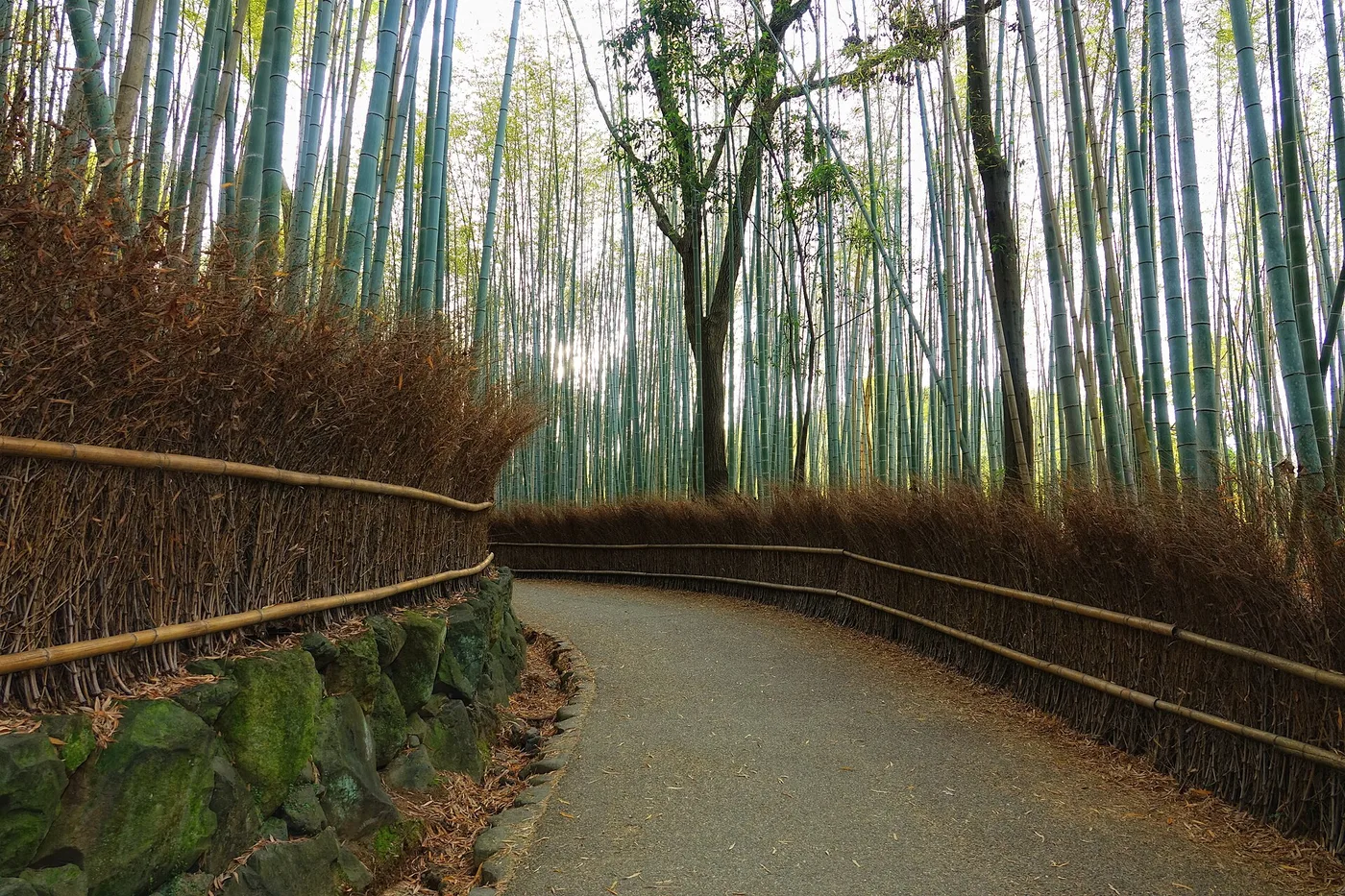
Now here is the photographer's own account of that same visit: the grove was "full of people that came for the same reason as we did", with "even taxis with tourists in a rush coming through". The calm-looking shots, he says, took patience and standing in exactly the right spot.
So every dreamy bamboo photo you have ever seen — including the one directly above — is a lie of framing. That's not a reason to distrust the place. It's the actual argument for going early: at 7am you don't need the patience or the trick, because the path really is that empty.
And no, you don't have to be heroic about it. 7am is the number that matters — early enough that the gates are quiet and the light is still low, late enough that you've slept and something is open for coffee. Spend your one early start where it pays you back, and it stops being a sacrifice.
Fushimi Inari needs its own half-day
The ten thousand torii gates are open 24 hours and free — which sounds like it can be squeezed in anywhere, and is exactly why people squeeze it in badly. By nine that tunnel is a queue, and the photo everyone came for is a photo of someone's backpack.
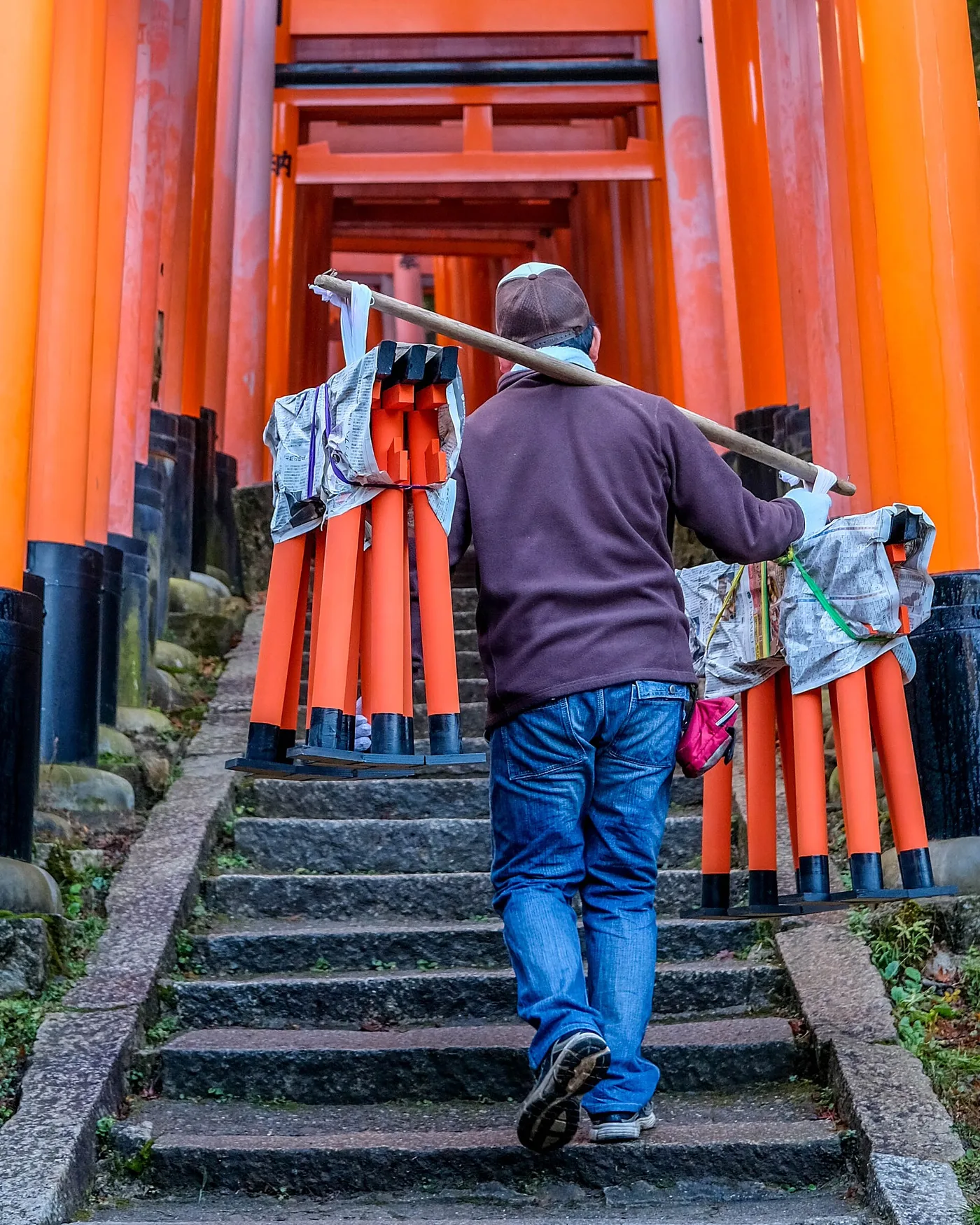
It helps to know the tunnel is a working structure, not a monument — those are new uprights going up the hill on a pole, and that goes on around you all year.
Go early and the climb does the rest: most people turn back at the first viewpoint, so the higher you go the emptier it gets. The other good answer is after dinner, when it's lit and genuinely eerie in the best way.
Either way it eats a half day you didn't budget.
When Kyoto should be a day trip
If your whole Japan trip is five days or less, don't sleep in Kyoto — day-trip it from Osaka (15 minutes by shinkansen, about 30 by regular train) and keep one hotel. Unpacking twice on a five-day trip is how you lose half a day to logistics and a suitcase zip.
One honest caveat: a Kyoto day trip means picking one zone and doing it properly. Higashiyama in the morning, lunch, and back for dinner in Osaka is a good day. Higashiyama and Arashiyama and Kinkaku-ji in a day is a story about buses. We wrote the full split logic in how to divide Tokyo, Kyoto and Osaka.
The honest math
| Trip style | Days |
|---|---|
| Ruthless first pass | 2 |
| First visit, sane pace | 3 |
| With a Nara day trip | 4 |
| Slow mornings, kaiseki nights | 5 |
Nara deserves the extra day if you have it — 45 minutes on the Kintetsu line, deer that bow for crackers (and then mug you for more), and the Great Buddha, which no photo prepares you for — ours included.
You can work all this out city by city. It takes an evening or two, and a lot of tab-switching.
Or don't: answer a few questions and get your days split for you in about a minute, early starts already placed where the crowds are worst. It's a solid first cut — most people just run with it, and anything you don't like takes a drag to move.